
Donate to the Lebanese Red Cross
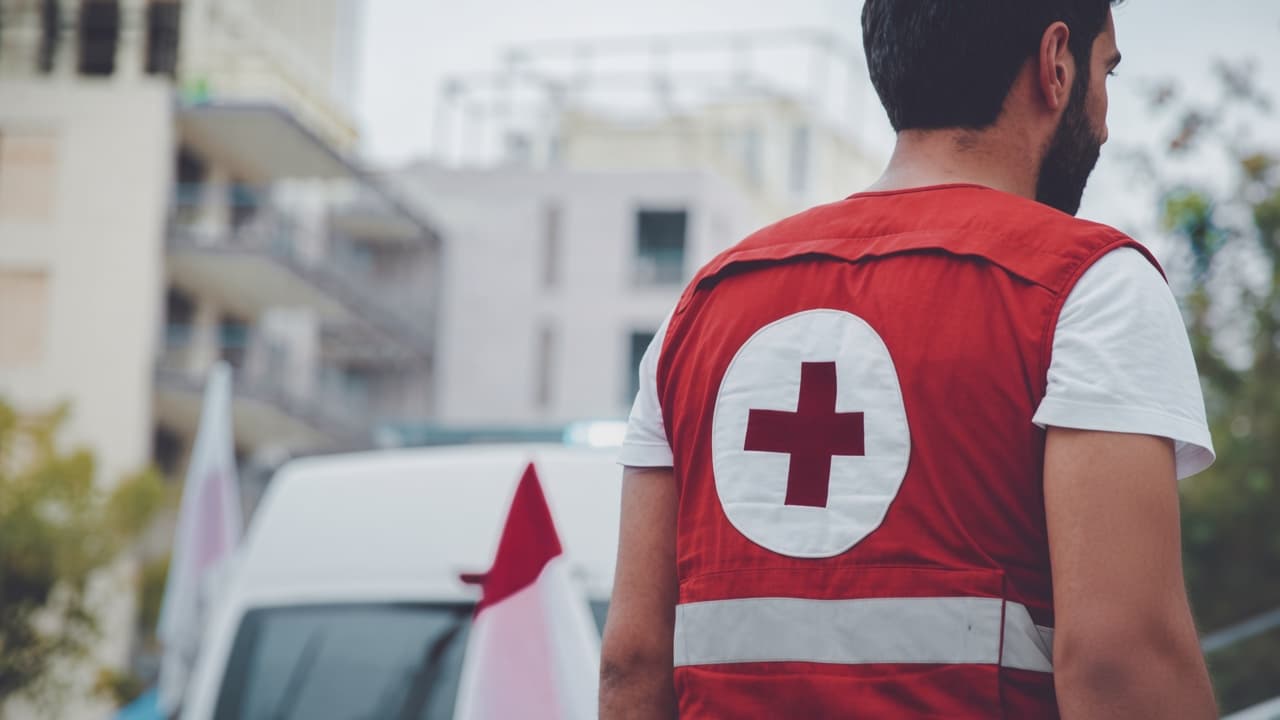
Lebanese Red Cross
Donate
Help us save lives
Quick donationCivil society directory
Explore 1,008 organisations in Lebanon. Search by name or job title, filter by type or sector, and open a profile for address, phone, email, jobs, and map.
Showing 12 of 1,008 organisations · Page 33 of 84
Lebanese Red Cross
Donate
Help us save lives
Quick donation
Lebanese Civil Defense
Equip Lebanon's
First responders
DonateDonations open the official Lebanese Red Cross and Civil Defense campaigns. We do not process payments on this site.
Al Mughrabi buiding - 8th floor Patriarch Hobeich Street Achrafieh Beirut , Beirut Lebanon
The International Centre for Migration Policy Development (ICMPD) was founded in 1993, upon the initiative of Austria and Switzerland. The organisation was created to serve as a support mechanism for informal consultations, and to provide expertise and efficient services in the newly emerging landscape of multilateral cooperation on migration and asylum issues. ICMPD’s Headquarters in Vienna play a central role in steering the strategic and operational direction of the organisation. In addition, the Brussels Mission strengthens ICMPD’s cooperation with the European Union and partner countries. ICMPD also operates a broad field presence, with 34 field and project offices coordinated through its Regional Offices across the organisation’s priority regions. This structure enables ICMPD to remain closely connected to developments on the ground and to deliver targeted support to its stakeholders. ICMPD has 21 Member States which form a Steering Group that exercise general supervision of ICMPD and approve strategic decisions. Decisions are taken based on the majority principle. The Steering Group is chaired by a different member state each year (rotation principle). The ICMPD Member States Programme (MSP) provides a structured framework for activities tailored specifically to the needs and priorities of ICMPD Member States. It supports national efforts to develop and implement effective migration policies by connecting Member States with the organisation’s thematic expertise, regional insights, and practical experience. The Programme serves both as a strategic platform for informal, solutions-oriented dialogue and peer-to-peer learning, as well as a gateway to ICMPD’s institutional expertise. Through this dual role, it enables Member States to access innovative practices, expert analysis, and outcomes from across ICMPD’s work.
Beirut , Beirut Lebanon
The International Center for Transitional Justice works to redress and prevent the most severe violations of human rights by confronting legacies of mass abuse. ICTJ seeks holistic solutions to promote accountability and create just and peaceful societies.To fulfill that mission, ICTJ links experience from its many field programs with its research in transitional justice. This allows ICTJ to develop, test and refine field practices and remain a research leader. ICTJ uses this knowledge to inform and advise governments, civil society and other stakeholders working on behalf of victims. It seeks to persuade those stakeholders, the media and the general public of the need for justice and accountability.
Monaco , Fontvieille Monaco
The Government of the Principality’s international development policy, which prioritises combatting poverty, is especially interested in the first eight SDGs and their focus on people, through with four main themes: Health, Food security, Socio-economic inclusion, Education.The most vulnerable populations are the core target of Monaco’s international development policy. They include children, women, people with disabilities, refugees and so on.
Qanater Zbeidi P.O Box 113-5233 Hazmieh, Greater Beirut , Mount Lebanon Lebanon
1 open job
The International Federation of Red Cross and Red Crescent Societies (IFRC) is the world's largest humanitarian organization, providing assistance without discrimination as to nationality, race, religious beliefs, class or political opinions.Founded in 1919, the IFRC comprises 187 member Red Cross and Red Crescent National Societies, a secretariat in Geneva and more than 60 delegations strategically located to support activities around the world. There are more societies in formation. The Red Crescent is used in place of the Red Cross in many Islamic countries.The IFRC vision: To inspire, encourage, facilitate and promote at all times all forms of humanitarian activities by National Societies, with a view to preventing and alleviating human suffering, and thereby contributing to the maintenance and promotion of human dignity and peace in the world.The role of the IFRCThe IFRC carries out relief operations to assist victims of disasters, and combines this with development work to strengthen the capacities of its member National Societies. The IFRC's work focuses on four core areas: promoting humanitarian values, disaster response, disaster preparedness, and health and community care. Further details of this work can be found in the What we do section.The unique network of National Societies - which cover almost every country in the world - is the IFRC's principal strength. Cooperation between National Societies gives the IFRC greater potential to develop capacities and assist those most in need. At a local level, the network enables the IFRC to reach individual communities.The role of the secretariat in Geneva is to coordinate and mobilize relief assistance for international emergencies, promote cooperation between National Societies and represent these National Societies in the international field.The role of the field delegations is to assist and advise National Societies with relief operations and development programmes, and encourage regional cooperation.The IFRC, together with National Societies and the International Committee of the Red Cross, make up the International Red Cross and Red Crescent Movement.
Aresco Center Justinian Street Beirut , Beirut Lebanon
The International Labour Organization is the United Nations agency for the world of work. We bring together governments, employers and workers to drive a human-centred approach to the future of work through employment creation, rights at work, social protection and social dialogue.
Sin El Fil, Horsh Tabet, Beirut Hall Beirut , Beirut Lebanon
4 open jobs
International Medical Corps is a global humanitarian nonprofit dedicated to saving lives and relieving suffering through health care training and relief and development programs. Established in 1984, it improves quality of life through health interventions that build local capacity in underserved communities worldwide.
NA Beirut , Beirut Lebanon
INARA is a 501(c)(3) nonprofit organization that provides essential medical and mental health support to children affected by human-induced or natural disasters. Founded in 2015, INARA operates in Lebanon, Palestine, Egypt, Afghanistan, Ukraine, Syria, and Türkiye, with plans to expand into Sudan and Yemen. The organization's areas of intervention include comprehensive medical services, mental health and psychosocial support, education in emergencies, economic empowerment, WASH (Water, Sanitation, and Hygiene) initiatives, and rapid emergency response. INARA emphasizes long-term care, ensuring that children receive continuous treatment and rehabilitation. Mental health programs focus on addressing trauma through therapy, psychoeducation, and community-based support. Educational initiatives offer remedial learning, teacher training, and community-led schooling for displaced children. Economic empowerment programs provide vocational training and entrepreneurship support to help reduce dependency on humanitarian aid. WASH interventions aim to secure clean water, sanitation, and hygiene facilities to prevent disease outbreaks. Additionally, INARA's emergency response efforts include the rapid deployment of medical teams, distribution of essential supplies, and crisis intervention.
Achrafieh , Beirut Lebanon
Founded in 2011, INSO is an independent, international Non-Governmental Organisation (NGO) headquartered in The Hague, Netherlands. We serve as the safety coordination and advisory body to the NGO community and provide daily support to more than 1,000 registered organisations working in high-risk contexts. Alongside the United Nations Office for the Coordination of Humanitarian Affairs (UNOCHA) and the various local and international NGO platforms, we serve as an important pillar of the humanitarian coordination architecture.
IOM Nicolas Sursock street next to Chinese Embassy and Lycee National school Jnah , Beirut Lebanon
3 open jobs
Established in 1951, IOM is today a proactive,responsive and results-oriented intergovernmental organization dedicated to promoting humane and orderly migration worldwide by serving the policy and programme needs of governments and migrants
Valley Green Residence Aylout Mansourieh , Mount Lebanon Lebanon
International Orthodox Christian Charities (IOCC) is a US-based international relief and development agency established in 1992 that offers emergency relief and development programs worldwide, without discrimination. Since 2001, IOCC has responded to humanitarian needs in Lebanon across sectors—from nutrition and education to water and sanitation projects—strengthening Lebanese communities and, more recently, assisting both refugees fleeing conflict in Syria, Iraq and Lebanese families in need. Background IOCC is the human relief and development agency of the Assembly of Canonical Orthodox Bishops of the United States. Outside the US, IOCC operates across Eastern Europe, Africa, and the Middle East. In carrying out its mission, IOCC applies the highest professional standards and renders itself fully accountable to the public and its donors. IOCC undertakes purely humanitarian and development activities, which are provided solely on the basis of need and serve families, refugees and displaced persons, the elderly, schoolchildren, orphans, and people with disabilities. IOCC in Lebanon Response to humanitarian needs in Lebanon has covered health and nutrition, food security, education, water and community development. For instance, IOCC boosts access to health services while building local capacities and systems. Mother-child health is a central focus of IOCC Lebanon health programs. Immunization activities ensure that children between 2 months old and 15 years old are protected against measles, polio, and other childhood diseases. In addition, IOCC’s school-snack program offers daily healthful food to over 32,000 students in more than 55 Lebanese public schools. IOCC has also helped repair over 60 public schools, ensuring more than 21,000 elementary and middle-school students have safe learning environments. Supporting access to proper nutrition, IOCC created an award-winning community kitchen, training Syrian refugee and local Lebanese women to prepare healthy food together to serve a large number of beneficiaries. Hundreds of hot meals are delivered by van weekly to families across northern and eastern Lebanon. IOCC has built and bolstered reservoirs and solar-powered pumping systems and has repaired water networks, serving refugees and Lebanese alike. Extensive hygiene-awareness campaigns bring together communities for learning and solidarity. All assistance is offered based on need alone.
n/a Beirut , Beirut Lebanon
Our Mission The International Refugee Assistance Project (IRAP) organizes law students and lawyers to develop and enforce a set of legal and human rights for refugees and displaced persons. Mobilizing direct legal aid, litigation, and systemic advocacy, IRAP serves the world’s most persecuted individuals and empowers the next generation of human rights leaders. Our Values IRAP believes that everyone should have a safe place to live and a safe way to get there. To that end, we value action, accountability, innovation, and candor. We are nimble, collaborative, and nonpartisan. We believe in the power of individuals to change their own circumstances. And we believe in results.
Naccache Street, Achrafieh Beirut , Beirut Lebanon
2 open jobs
Our workThe International Rescue Committee responds to the world’s worst humanitarian crises and helps people whose lives and livelihoods are shattered by conflict and disaster to survive, recover, and gain control of their future. Our Impact In 2016, more than 26 million people benefited from IRC programs and those of its partner organizations. In 2016, the IRC and its partner organizations: Helped more than 24 million people gain access to primary and reproductive health care. Vaccinated more than 173,000 children under the age of one against measles. Supported 2,507 clinics and health facilities that helped 171,000 women deliver healthy babies. Supported more than 21,000 community health workers to treat communicable diseases in children under age 5 and treated more than 186,000 children under the age of five for acute malnutrition. Gave 3.8 million people access to clean drinking water or sanitation. Provided schooling and educational opportunities to more than 1.5 million children; trained more than 33,000 educators and supported more than 11,000 schools. Provided counseling, care and support to more than 42,000 vulnerable children and trained more than 2,200 child protection workers. Created or supported 2,000 village savings and loan associations that benefited more than 58,000 members who saved more than $2.4 million. Helped more than 4,000 people access financial services. Trained some 15,000 farmers in agriculture and agribusiness, and provided almost 40,000 farmers with access to markets and farm resources including seeds and fertilizers. Provided job-related skills training to more than 53,000 people. Helped create or support 40,000 businesses. Provided cash and asset transfers to more than 227,000 individuals and displaced households, 46 percent of whom were women. Provided counseling and health, social and legal services to more than 14,400 survivors of gender-based violence (GBV) and reached some 1.8 million people with community-based gender-based violence prevention efforts. Offered legal assistance to more than 37,000 people; trained 27,394 people in the principles of human rights and protection; offered information on preventing and responding to human rights abuses to more than 267,000 people. Trained over 31,300 people in the principles of governance (improving government accountability) and provided information on governance to more than 156,400 people. Through the Resettlement Support Center in Thailand assisted more than 13,000 refugees from East Asia to resettle in the United States. In the United States, helped resettle 13,400 newly arrived refugees Since the start of the Syrian conflict in 2011, Lebanon has taken in over 1 million refugees. Syrians now constitute almost a third of the country’s population. With no formal refugee camps in Lebanon, Syrians are living in cramped apartments, unfinished buildings and tents. Currently, humanitarian services are unable to keep up with needs as refugees deplete their resources. What are the main humanitarian challenges in Lebanon?Seven out of 10 Syrian refugees in Lebanon live in extreme poverty. Meanwhile, host communities, many of them already poor, have seen living conditions deteriorate in their neighborhoods. Approximately 200,000 Syrian children in Lebanon do not attend school. Those who do make it back into the classroom often need extra support because of years of lost education. Many children have experienced trauma and require emotional support. Women and girls, specifically, are at risk of violence and exploitation in daily life, and many cannot access the services and support they need. How does the IRC help in Lebanon?The IRC’s mission is to provide emergency aid and other support to refugees living in unsafe conditions. The IRC also assists vulnerable communities that host refugees. We began our work in Lebanon in 2012 as Syrian refugees began fleeing the civil war. We have been providing economic support, legal services, education and protection for the most vulnerable, including the elderly and people with disabilities. The IRC is working in all areas of the country to support refugee and host communities by: operating classrooms and teacher training programs for thousands of Syrian children; providing Syrian refugees with cash assistance for basic needs; providing safe spaces for women and girls to gather, share information and receive emotional support, crisis counseling and social worker assistance; providing children with creative learning and therapeutic activities to help them recover from trauma and avoid working out in the streets; providing refugees and local communities with skills training, small business development and job placement; providing legal and information to refugees to help them access services and exercise their right to international protection. What still needs to be done?As the crisis pushes thousands of refugees into poverty and threatens their long-term social and economic health, the IRC’s work in Lebanon is more critical than ever. We pledge to put the needs of those most affected by crisis at the forefront of our efforts and to achieve measurable improvements in safety, empowerment, education, and economic well-being. Here’s a closer look at some of the work we will be doing over the next few years to achieve our goals. We will continue to support Syrians who have been forced from their homes, as well as underserved Lebanese. The IRC will also open and expand sites across Lebanon according to greatest need. IRC teams and partners currently reach almost 60,000 people in Lebanon with lifesaving support. Over the next several years, we will focus on the following areas: Safety As a leader in protection, the IRC will strengthen our efforts to stop child labor, identify violations of refugee rights, and provide legal services to those in need. We will also address the special needs of street children and women and girls at risk for abuse and isolation. Power The IRC will increase our efforts to empower refugees and improve their quality of life. We will work to strengthen relationships between host and refugee communities through dialogue and problem solving. We will also improve local capacity to provide social services by building local and national systems in case management and in family and labor law. Education The IRC will launch early childhood education services to help refugee children succeed in Lebanese public schools. Economic wellbeing The IRC will provide more skills training and create new partnerships with businesses that hire refugees. We will also help women and girls achieve equality with men and boys.