
Donate to the Lebanese Red Cross
Lebanese Red Cross
Donate
Help us save lives
Quick donationCivil society directory
Explore 419 organisations in Lebanon working in Development. Search by name or job title, filter by type or sector, and open a profile for address, phone, email, jobs, and map.
Showing 12 of 419 organisations · Page 20 of 35
Lebanese Red Cross
Donate
Help us save lives
Quick donation
Lebanese Civil Defense
Equip Lebanon's
First responders
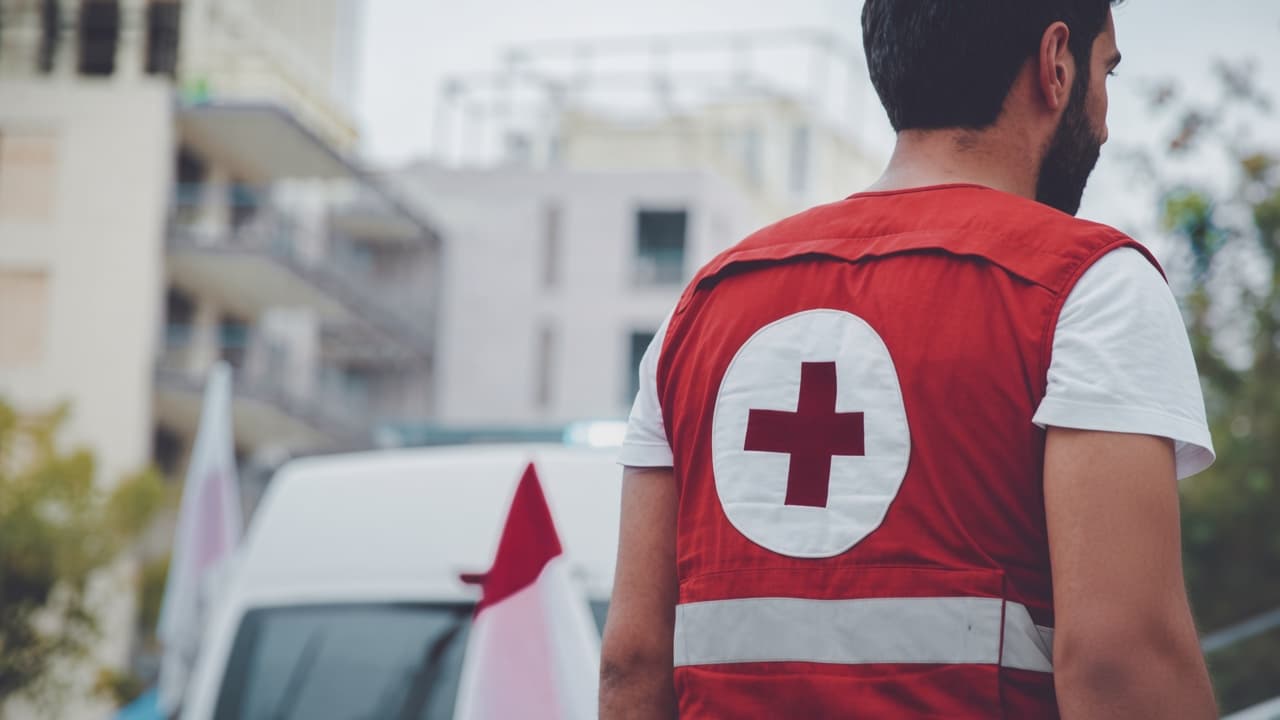
DonateDonations open the official Lebanese Red Cross and Civil Defense campaigns. We do not process payments on this site.
Lebanon
MMA GLOBAL+ was established in 2020 to promote Martial Arts at a grassroots and community level, highlighting the developmental and social benefits of the sport. Our organization is committed to fostering resilience, character development, and social change through martial arts. We emphasize building a healthy sense of self-worth, discipline, and leadership among participants while addressing societal challenges such as bullying and marginalization. Our key activities include organizing Martial Arts Championships that unite diverse communities, technical seminars for coaches and fighters, youth-focused seminars promoting sportsmanship, and psychosocial support (PSS) training programs for children affected by conflict. In 2024, we held an anti-bullying fighting championship, combining awareness discussions with competitive fights to empower youth and promote solidarity. Moving forward, we aim to expand our initiatives to include outreach programs for vulnerable populations, using martial arts as a tool for empowerment, inclusivity, and community rebuilding. Through these efforts, we strive to harness the transformative power of martial arts to create a positive, lasting impact.
Lebanon
Mobadiroon aims to promote a feeling of citizenship and loyalty to the country through the promulgation of participation mechanisms and their activation in public affairs’ management.
Jounieh , Mount Lebanon Lebanon
In line with the vision of Association Montessori Internationale (AMI), the Montessori Society for Education and Development intends to support the natural development of human beings from birth to maturity, enabling them to become the transforming agents in society leading to a more harmonious and peaceful world.The Montessori Society for Education and Development seeks to bring quality Montessori education and support to under-sourcedcommunities living within the Lebanese borders, both local and refugee, in order to build and nurture environments of peace and collaboration, in an effort to counter the effects of war. It is our experience that education is an aid to life, and that the culture that respects children’s fundamental rights, as well as their natural development needs, is catalyst for both individual and social growth.
Lebanon
Our organization aims to improve the quality of life of the Lebanese in order to keep them rooted in their country. Moutajaziroun believes in providing the right for every single citizen to feel secure, provided for, cared for by supporting them in difficult times and is therefore working on creating new opportunities to create a strong base of belonging.
Ground Floor Akram Awayda street Dam w farez Tripoli , North Lebanon Lebanon
Al Mubadara wa Al Ataa is an NGO, that does not earn profits and does not belong to any political party. It started its work as a youth committee in 2008 and obtained the official license in 2014, Number of volunteers 30 persons.Our goals:1- Social Aim: - Providing a study about the residents' social situations and their needs to achieve social development. - Cooperating between the regions representatives to reach a strategy to reform the society. - Merging orphans and children with special needs in society. 2- Educational Aim: - Supporting students by providing them with text books and educational fees. - Establishing educational seminars aiming to spread intellectual awareness. - Establishing literacy courses. - Establishing semi-free schools - Providing careers for special needs children that fit their physical and psychological states. - Providing awareness sessions and seminars for residents on both social and medical aspects. 3- Medical Aims: - Establishing dispensary health care treatment facilities and providing medicine for people in need of it. - Providing moral and financial support for people who are in need of surgeries. - Fulfilling our duties at the time of death of any resident by providing necessary help.
Tall Square Tripoli , North Lebanon Lebanon
Tripoli is the second established city of Lebanon and is situated 85 kms north of Beirut. The municipality has twenty Four elected council members and is a member of the Union of Municipalities of AL Fayhaa grouping the municipalities of Mina, Beddawi and Kalamoun. The current mayor of Tripoli is the president of the Union of AL Fayhaa.
Lebanon
Musharek is a Lebanese non-profit association, comprising skilled professionals with a blend of local and international expertise. Our collective aim is to enhance the concept of corporate social responsibility in Lebanon, as well as support and promote STEM education, innovation, and social development. The establishment of Musharek stemmed from the recognition of the vital role technology and education play in driving social and economic development within communities. Guided by our mission, Musharek strives to empower communities and foster sustainable social development through our five pillars: corporate social responsibility initiatives, social research, education, social development, and innovation.
Lebanon
MuZE-Aid is a not-for-profit civil corporation whose aim is to assist the Zgharta-Ehden municipality and the population within its jurisdiction. it is MuZE-Aid's objectives to tackle bureaucracy and organize the municipality's efforts and finances.
Beirut Lebanon
We envision an equitable and inclusive student-centered education system that builds the engaged citizens of tomorrow, where schools have more autonomy to implement participatory local solutions that improve the school and impact its direct community. We believe that sustained social change at the national level is rooted in a transformed education system that teaches: Skills for the future of work Critical thinking Social Justice Citizenship Good Governance
Lebanon
Our mission is to advance the role of psychology and spread psychological awareness and knowledge in the Lebanese society. We do this by: Elevating the public's understanding and use of psychology. Enhancing the discipline and profession of psychology Cooperating with local, regional and international psychological organizations and associations. Promoting and Supporting Psychological Publications. Promoting the application of psychological sciences by creating constantly and continuously different programs and projects
Lebanon
Naseej is dedicated to enhancing social stability and community resilience by empowering local committees, fostering inclusive decision-making, and implementing sustainable projects in WASH, education, and social cohesion. Through collaboration with municipalities, civil society, and diverse stakeholders, Naseej provides a platform for host and refugee communities to identify priorities, address shared challenges, and build stronger, more inclusive communities.
Beirut , Beirut Lebanon
National Development Committee Agricultural Revival Program – Concept Document Introduction The National Development Committee (NDC) was established 1982 in Lebanon, as a Non-Profit organization – License number 59/A.D. NDC’s central mission is to promote a model for integrated community development through concurrent advancement of agriculture, health, education, technical training, and socioeconomic support. The Agricultural Revival Program (ARP) was launched in July 2020 in response to the severe economic turmoil in Lebanon. The key economic impairment was identified by ARP as heavy dependence on consumption of strategic agricultural products through importation of goods. The solution is straightforward: A steady conversion of agricultural economic drivers into a model of incremental agricultural production driven by long-term planning, food security target milestones, scientific methodology, and focus on sustainability; all optimized through data-driven performance measures. In the absence of an effective government system, economic turmoil, and financial hardships, it was critical to turn into the grassroots of where such a conversion of agricultural economic drivers should begin: the farmer, which implies starting in rural communities. Each village would be an “operational unit” of individual farmers, in production, service, and local marketing. Overflow product across villages will be combined into the central pool of product obtained from central areas, to be marketed primarily domestically in Lebanon and secondarily abroad. A primary goal of the plan is to secure domestic production of various product types, equivalent to a strategic reserve for Lebanon equaling 25-50% (3-6 months) of the annual consumption. This program does not assume the ability to change course for the country. It is an attempt to assist the less fortunate to withstand adversity during this economic turmoil, while providing a model in planning and increased productivity, for the future of Lebanon. The program model of ARP is a long-term plan for agricultural development based on increased productivity targeting small scale farmers supported by a central facility (figure-1), resulting in bolstering food security, family income, and improved practices through training, factual knowledge, and improved effective technical skills. Target product areas to be addressed during the 10-year plan are grains and pulses, animal resources (poultry, cattle, and fish), fruit trees, seasonal crops, herbal crops, and specialty crops. The overarching goals of the ARP program is to build agricultural production and capacity for implemented projects in order to: impact a minimum of 5% reduction in imports of these products within 4-6 years of project initiation Continue to reduce imports of these products every 1-2 years thereafter Establish infrastructure that support processing, storage, and transport of agricultural products Enhance packaging, manufacturing, food, and equipment services related to agriculture Secure marketing of those products at three levels: local, domestic, and exports Each project is based on a clear foundation of scientific information and statistics, implemented with well defined performance measures and milestones over time, and enhanced by increased training, knowledge, and quality assurance monitoring. The ARP projects are implemented on an upward development trajectory in quality and volume through gradual widening of the base of farmers involved in and benefiting from them. That approach is predicated on the premise of building a broad production base that can be integrated in the future, into a long-term government agricultural plan, which is currently non-existent. ARP will be seeking funding for its projects, with the majority of funds intended for use in development activities, with the farmer as a partner responsible for a fraction of the cost. Administrative overhead will not exceed 10% at any point. A small portion of the budget would be dedicated for handling of urgent catastrophic events or relief interventions. Two main projects were launched or in setup stage, starting October 2020: 1) Grains and Pulses 2) Poultry Grains and Pulses Two component cereal products were setup in the summer 2020 and launched in October: Wheat and barley. Three additional pulse products are planned for launch in the fall of 2021: Lentils, chickpeas and beans. These projects are being implemented in collaboration with the Lebanese Agriculture Research Institute (LARI) of the Ministry of Agriculture in Lebanon, and scientific input from the ICARDA International Organization and. The latest hybrid types of these grains and pulses developed by ICARDA and tested and propagated by LARI, are being used. The intent of the program is to propagate food security of these strategic plant products in rural communities, while establishing a plan for progressive reduction in imports through increased domestic production in the short term, and regional collaborative projects in the long term. The current imports of wheat and barley cover 89% and 80% of the domestic consumption respectively (Table 1). The five-year plan for incremental production, re-plant, and expansion of wheat and barley planted areas are based on projections for productivity of 400 kg per donom (compared to 180 kg average for the local “Baladi” variety). However, due to our professional oversight and the varieties used, it is possible to reduce the required target area by up to half, through achieving yields in excess of 500 kg per donom (yields in excess of 800 kg per donom were achieved in previous experiments). Wheat A target area of 15,000 Hectares (X10 = donoms, 150 km2), based on 400Kg/donom production, should be planted to produce wheat, sufficient to reduce imports by 5%, and is expected to be achieved by the summer of 2025. To achieve such target, over 5000 farmers should be involved with an average area of 1 Hectare each. The remaining 10,000 Hectares would be distributed over 20-50 central areas of 100-1000 Hectares each in the areas: Beqaa, Akkar, Khiyam, Marjeyoun, and Wazzani. The overall area needed to lower imports by 5% can be reduced to 10,000 Hectares with increased production to 600 Kg/donom (Table 1). The wheat types essential for food security are being targeted: dark and light dorum, with minor emphasis on soft light wheat. The objective is to support plantation of varieties that are usable for “Borghol” and “Freekeh” and one soft variety for bread. A large portion of imported wheat flour is being used in sweets, baked goods, and other non-essential utilities, and is not targeted as part of the objective to reduce imports of these two cereals. Due to land area limitations in Lebanon, further expansion of the project to result in reduction of imports by over 25%, would definitely require collaborative efforts with partner countries such as Syria, Iraq, and/or Jordan. Production cost of one metric ton is estimated between 0.8 to 1.2 million LP. The long-term economic feasibility of the project (based on 400-600 Kg/donom) requires support by the Lebanese government for the crop at a price in the range of 1500-1800K Lebanese Pounds per mTon (In the summer of 2020, soft white wheat was sold in the Lebanese open market for 2000 LP/Kg and hard dark wheat for 4000 LP/Kg). Barley A target area of 2500 Hectares (25 km2) should be planted to produce barley at a rate of 400 Kg/donom, would be sufficient to reduce imports by 5%, and is expected to be achieved by the summer of 2025. The total area required to achieve that goal can be reduced to 1800 Hectares based on production of 600 Kg/donom. Over 1000 farmers should be involved with an average area of 1 Hectare each and 8-10 central areas of 200-500 Hectares each, in order to achieve that target goal. Pulses Planned to be initiated in 2021, in coordination with ICARDA and LARI, to be planted in the 10 donoms used for wheat and barley in 2020, and to follow a similar process thereafter. Poultry Prior to the start of the economic hardship environment in Lebanon about a year ago, Lebanon was an exporter of chicken eggs in addition to fulfilling domestic market needs of egg consumption. Lebanon also had fresh poultry meat production to meet domestic demand, but was an importer of chilled and frozen chicken meat. The economic hardship resulted in 2-3-fold increase in poultry egg and meat prices, which prompted many farmers in rural areas to consider raising own chicken for egg and meat consumption, and possibly for some additional source of income. On the other hand, the economic downturn made the closure of a number of the commercial poultry production farms a real possibility. The dynamics of poultry production in rural areas changed significantly over the past year rendering its status, extent, and dimensions, to be ill-defined at this point. Field Study To better understand the landscape of poultry production at the small farmer scale in rural Lebanon, ARP is conducting a study in 22 villages of Qaza Nabatiyeh. The study started in early November 2020, and is expected to include 450-500 farmers. The study targeted farmers who 1) Are already raising 20 or more chicken (Indicator for farmer investing capital to improve family consumption + secure some additional income), and 2) Do not have monthly income exceeding 2 million LP from other sources. A field team of 5 agricultural assistants participated in conducting the study. Data from 460 farmers have already been entered into a MS-Access database, and provided the following preliminary profile: Data from 22 villages on 460 farmers who own over 16,000 chicken. Their total egg production exceeds 27000 eggs per week, an average of 2.32 eggs per hen, 88 eggs per farmer per week. The estimated coop area per chicken was 0.52 m2, 88.2% of farmers rely on breeding their own chicks, but only 2% of them vaccinate their chicks. These farmers an average monthly commercial feed consumption of 2.6 kg per chicken. The farmers lost over the past year, the equivalent to 17.3% of their current ownership, for an average loss of 7 chicken per farmer. Based on the preliminary results, we project that this pool of farmers to own over the coming 12 months about 20,000 chicken, and have a total production of about 40,000 eggs per week (2.6 million eggs annually); which is equivalent to a mid-sized poultry farm distributed over 22 villages and 460 farmers. Based on the preliminary study data, we outlined the following intervention approach: Goals Enhance chicken health and immunity through clean water and habitat, and immunity boosting supplements. Increase chicken meat and egg production through a long-term program for male and female chicken renewal. Increase chicken count to 50 or higher per farmer to provide eggs and meat based on an annual goal set by the farmer family and extra egg production for sale and income generation. Major areas of assistance to the farmer (In order of priority) Provide automatic waterers and feeders, and immunity boosting supplements added to drinking water and/or feed Formulate a program for introducing natural nutritional feeds to reduce commercial feed over 3 years by up to 50% Implement a program to enhance clean and healthy living habitat for improved chicken care and hygiene, with utmost focus on public health hazards poultry and their products may constitute to the spread of infectious disease. Establish a farmer-based program for chicken renewal and gender mix, based on goals set for the family meat and egg consumption, additional income, and breeding preferences; while introducing higher production layers into the mix. Medical support based on a need-to-basis access to a veterinarian, with focus on preventative aspects of handling of chicken and their eggs. Assist with measures to promote chicken wellbeing through availability of nesting boxes, feeders, sleep perches, and protection from environmental hazards, disease, and predators. Secure venues for marketing of egg and meat products at the local, domestic, and export levels. Long-Term Expand program to other areas to include more farmers following the same methodology driven by promoting food security and increased income: survey- plan- assist.